When it comes to veterinary emergencies, few conditions require faster treatment than Gastric Dilatation and Volvulus (GDV), more commonly known as bloat. GDV can develop within hours and is a true life-threatening emergency. Knowing the warning signs and acting quickly could save your dog's life.
What is GDV?
GDV stands for Gastric Dilatation and Volvulus. It occurs in two stages:
- Gastric Dilatation (Bloat): The stomach rapidly fills with gas, food or fluid, causing it to become enlarged.
- Volvulus (Twist): The enlarged stomach then twists on itself, trapping the contents inside and cutting off its own blood supply.
Once the stomach twists, blood flow to the stomach and surrounding organs is compromised. The swollen stomach also places pressure on major blood vessels, reducing blood flow back to the heart. Without immediate treatment, dogs can quickly go into shock
and the condition can become fatal.
Which Dogs Are Most at Risk?
While GDV can occur in any dog, it is most commonly seen in large and giant breed dogs, particularly those with deep, narrow chests.
Older dogs and dogs with a close relative that has experienced GDV also appear to have a higher risk.
What Are the Signs of GDV?
The symptoms of GDV often develop suddenly and worsen very quickly. Watch for:
- Repeated attempts to vomit or retch with nothing coming up
- A swollen or tight-looking abdomen
- Restlessness or pacing
- Excessive drooling
- Panting or difficulty breathing
- Whining or signs of abdominal pain
- Looking at their stomach
- Pale gums
- Weakness or collapse
One of the most classic signs is a dog that is trying to vomit repeatedly but nothing is coming up. If you notice any of these signs, treat it as an emergency and seek veterinary attention immediately. Do not wait to see if your dog improves.
How Is GDV Diagnosed?
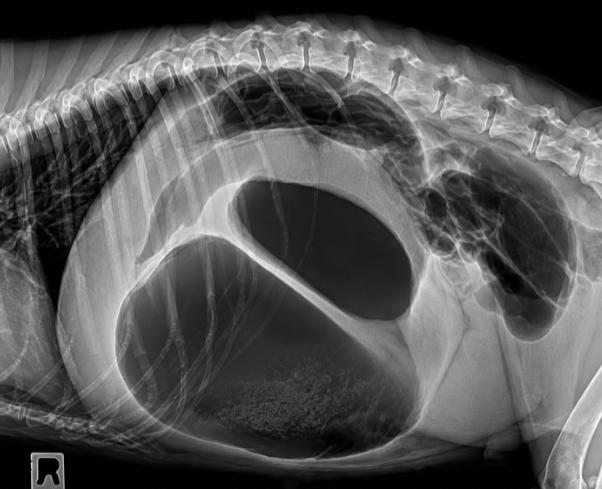
Your veterinarian will perform a physical examination and usually recommend abdominal X-rays to confirm whether the stomach has twisted.
At the same time, your dog will be stabilised with intravenous fluids, pain relief and oxygen if required. Blood tests and heart monitoring may also be performed, as GDV can affect the entire body.
How Is GDV Treated?
GDV is a surgical emergency. Treatment typically involves:
- Emergency stabilisation with IV fluids and medications
- Releasing the pressure inside the stomach by removing trapped gas
- Emergency surgery to untwist the stomach
- Assessing the stomach and nearby organs for any damaged tissue
- Performing a gastropexy, where the stomach is permanently attached to the body wall to greatly reduce the risk of it twisting again
Even with prompt treatment, GDV remains a very serious condition. However, the sooner treatment begins, the better the chances of a successful recovery.
Can GDV Be Prevented?
Unfortunately, there is no guaranteed way to prevent GDV, but there are several steps that may help reduce the risk:
| Feed smaller meals | Rather than feeding one large meal each day, offer two or more smaller meals. |
| Slow down fast eaters | Dogs that gulp their food may swallow more air while eating. Slow-feeder bowls or puzzle feeders can help encourage slower eating. |
| Avoid vigorous exercise around mealtimes | Try to avoid strenuous exercise for at least an hour before and after meals. |
| Feed at ground level | Current evidence suggests feeding dogs from ground level unless your veterinarian recommends otherwise. |
| Consider a Preventative Gastropexy | For breeds considered to be at high risk, your veterinarian may recommend a preventative gastropexy. This procedure can often be performed at the same time as desexing and significantly reduces the chance of the stomach twisting later in life, although it does not completely prevent stomach bloating. |
Time Really Does Matter
GDV is one of the fastest-moving emergencies we see in veterinary medicine. Waiting even a few hours can dramatically affect your dog's chances of survival.
If your dog is showing signs of bloat or repeatedly trying to vomit without bringing anything up, contact your veterinarian or the nearest emergency veterinary hospital immediately.
We're Here to Help
At Maraboon Vet Surgery, our team is equipped to assess and stabilise emergency patients quickly and provide urgent care when every minute counts.
If you ever think your dog may be suffering from GDV, don't wait – call us immediately on 07 4987 6800 so we can advise you on the next steps.
When it comes to GDV, acting quickly can truly save a life.