

One mosquito bite is all it takes.
Heartworm disease is a serious and potentially life-threatening condition in dogs. It is caused by a parasitic worm called Dirofilaria immitis and is spread through the bite of an infected mosquito.
Here in Central Queensland, mosquitoes are certainly no strangers! This means our dogs can be exposed to heartworm wherever mosquitoes are present, even dogs that spend most of their time indoors.
The good news? Heartworm disease is preventable, and keeping your dog's prevention up to date is much easier and safer than treating an established infection.
How Do Dogs Get Heartworm?
Heartworm cannot spread directly from one dog to another. Mosquitoes are responsible for transmitting the infection.
When a mosquito bites an infected dog, it can pick up immature heartworm larvae. When that mosquito later bites another dog, these larvae can be transmitted to them.
Over time, the larvae develop and migrate towards the heart and blood vessels of the lungs, where they mature into adult heartworms. Adult worms can interfere with normal blood flow and cause significant, potentially irreversible damage to the heart and lungs.

What Are the Signs of Heartworm?
One of the concerning things about heartworm disease is that dogs may show very few, or even no obvious symptoms during the early stages of infection.
As the disease progresses, signs can include:
-
Persistent coughing
-
Tiring easily or reluctance to exercise
-
Lethargy or weakness
-
Reduced appetite
-
Weight loss
-
Difficulty breathing
-
Signs of heart failure in severe cases
By the time symptoms become noticeable, significant damage may have already occurred. This is why prevention and appropriate testing are so important.
How Can Heartworm Be Prevented?
There are several effective heartworm prevention options available, including monthly preventatives and long-acting veterinary-administered injections.
At Maraboon Vet Surgery, ProHeart is a convenient option for owners wanting long-lasting heartworm protection without having to remember a monthly dose.
The most important thing is that heartworm prevention is given consistently and on schedule. If your dog's prevention has lapsed or you're unsure when their last dose was given, please speak with our veterinary team before restarting prevention.
How is Heartworm Diagnosed?
If your dog is not currently on heartworm prevention, has missed or lapsed prevention, or has an unknown prevention history, your veterinarian may recommend a simple blood test to screen for heartworm infection.
The most commonly used screening test looks for antigens produced by adult female heartworms in your dog's bloodstream. Your vet may also examine a blood sample for microfilariae, which are the microscopic immature offspring of adult heartworms circulating in the blood.
Because heartworm disease can be present before obvious symptoms develop, testing is an important part of detecting infection early.
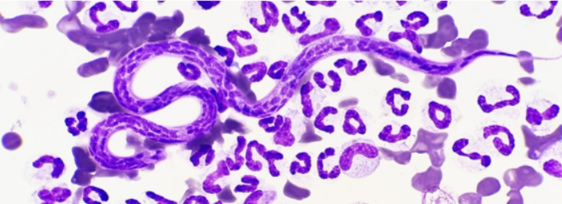
Figure – Microfilariae present under the microscope
What Happens if My Dog Tests Positive?
If your dog returns a positive heartworm screening result, further testing is usually required to confirm the infection and determine how significantly the heart and lungs have been affected.
Step 1: Further Diagnostic Testing
The veterinarian may recommend:
-
Additional blood testing to confirm the infection and assess your dog's overall health and organ function
-
Testing for circulating microfilariae
-
Chest X-rays to assess the heart, lungs and pulmonary blood vessels
These results help your veterinarian determine the severity of the disease and develop the safest treatment plan for your dog.
Step 2: Stabilisation Before Treatment
Dogs with more advanced heartworm disease may require supportive care before treatment can safely begin. Depending on the individual patient, this may include:
-
Medications to manage inflammation or support heart and lung function
-
Antibiotics such as doxycycline to target Wolbachia bacteria associated with heartworms
-
Strict exercise restriction to minimise stress on the heart and lungs
Step 3: Heartworm Treatment
Treating heartworm is a carefully staged process and may take several months.
-
Pre-treatment: Dogs are generally started on an appropriate heartworm preventative alongside other medications to target immature stages and help reduce treatment-related complications.
-
Adult heartworm treatment: Specific medication is administered by injection in a carefully managed protocol to kill the adult heartworms.
-
Strict rest and monitoring: Exercise restriction is an essential part of treatment. As adult heartworms die, worm fragments can lodge in the small blood vessels of the lungs and cause serious complications. Keeping your dog calm and restricting activity significantly reduces this risk.
Heartworm treatment can be lengthy, costly and carries potential risks, which is why year-round prevention remains the safest and simplest way to protect your dog.
Does My Dog Need a Heartworm Test?
A simple blood test can be used to screen dogs for heartworm infection.
Testing is particularly important for dogs that have not been receiving consistent heartworm prevention, have an unknown prevention history, or have had a significant lapse in their prevention.
Our team can check your dog's history and recommend whether testing is required before commencing or restarting prevention.
SPECIAL OFFER THIS MONTH
Take advantage of our Heartworm Month promotion at Maraboon Vet Surgery!
This month, we are offering a COMPLIMENTARY HEARTWORM TEST for dogs receiving their ProHeart injection on the same day!
It's the perfect opportunity for dogs that are:
-
Starting ProHeart prevention
-
Overdue for their heartworm prevention
-
Returning to prevention after a lapse
-
Due for testing before restarting their protection
Our team can help determine whether your dog requires testing and get their heartworm prevention back on track.
Protect Your Dog Year-Round
Mosquitoes don't need an invitation to find our pets, and it only takes an infected mosquito to put an unprotected dog at risk.
If you're unsure whether your dog's heartworm prevention is up to date, now is a great time to check.
Contact us on 07 4987 6800 or email us at admin@maraboonvet.com.au to book an appointment or ask us any questions about heartworm disease and prevention.
Keeping prevention up to date is one of the simplest things we can do to protect our dogs from this potentially devastating disease.