Heatstroke Awareness: Warning Signs, Prevention & Emergency Care
Summer in Emerald and the Central Highlands means long, sunny days, soaring temperatures and plenty of opportunities to enjoy the outdoors. But while we might love the warmer weather, the Queensland heat can be dangerous for our four-legged friends.
Unlike us, dogs and cats have limited ways of cooling themselves down. When temperatures rise, they can quickly become overheated, putting them at risk of heatstroke, a serious and potentially life-threatening condition.
At Maraboon Vet Surgery, we want to help you keep your pets safe this summer. From recognising the early warning signs to knowing what to do in an emergency, here is everything you need to know about heatstroke in pets.
What Is Heatstroke?
Heatstroke occurs when your pet’s body temperature rises to dangerously high levels and their natural cooling mechanisms can no longer keep up. While humans rely heavily on sweating, dogs primarily cool themselves through panting. Cats also seek shade, groom and reduce their activity to manage heat.
In hot or humid weather, these cooling methods may not be enough. As body temperature rises, heatstroke can cause serious damage to the brain, kidneys, liver and heart. Heatstroke is a veterinary emergency and can be fatal without prompt treatment.
Recognising the Warning Signs of Heatstroke
Heatstroke can develop surprisingly quickly. Recognising the warning signs early could save your pet’s life.
Early warning signs
- Excessive or heavy panting
- Excessive drooling or thick, sticky saliva
- Restlessness or agitation
- Bright red gums or tongue
- Rapid breathing or increased heart rate
- Seeking shade, water or cool surfaces
More serious signs
- Vomiting or diarrhoea, sometimes containing blood
- Weakness, wobbliness or difficulty standing
- Confusion or disorientation
- Pale, grey or blue-tinged gums
- Collapse, seizures or unconsciousness
Do not wait for your pet to collapse. If you notice signs of overheating, begin cooling your pet and contact your veterinarian immediately.
Which Pets Are Most at Risk?
Flat-faced breeds
French Bulldogs, Pugs, British Bulldogs and Boxers are particularly susceptible because their shortened airways make panting less effective.
Overweight pets
Excess body weight can make it harder to regulate body temperature.
Senior pets and young animals
Older pets, puppies and kittens may struggle to cope with extreme temperatures.
Active and working dogs
Working dogs, sporting dogs and enthusiastic backyard players can overheat during physical activity.
Pets with underlying health conditions
Heart disease and respiratory conditions can increase the risk of overheating.
Heatstroke does not only happen on extremely hot days. Exercise, humidity and poorly ventilated environments can also contribute.
5 Simple Ways to Prevent Heatstroke
1. Fresh Water and Shade Are Essential
Always provide fresh, cool drinking water. Consider placing multiple bowls around your home and yard. Make sure outdoor pets have shade throughout the day, remembering that shaded areas move with the sun. On particularly hot days, a cool indoor space is often the safest option.
2. Walk During the Cooler Parts of the Day
Avoid walking, running or exercising your dog during the hottest part of the day. Choose early mornings or cooler evenings, offer regular water breaks and allow plenty of rest. For working dogs, be especially mindful during cattle work or extended periods outdoors.
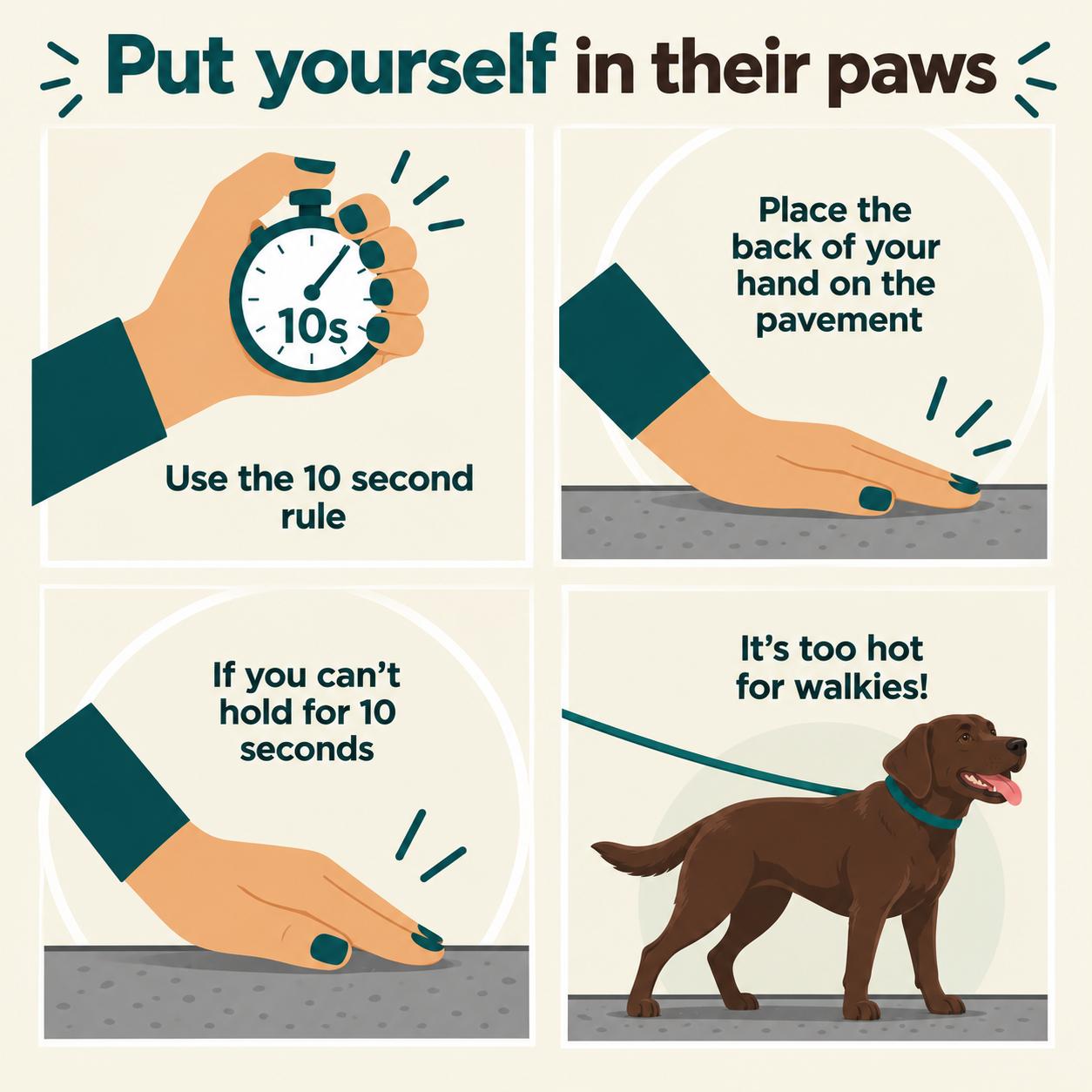
3. Watch Out for Hot Pavement
Concrete, asphalt and sand can burn paws. Place the back of your hand against the pavement for several seconds. If it is too hot to hold comfortably, it is too hot for your pet’s paws. Choose grass or shaded paths where possible.
4. Never Leave Pets in Parked Cars
Temperatures inside parked vehicles can rise dangerously within minutes, even on mild days. Cracked windows and shade do not make a parked car safe. Never leave your pet unattended in a vehicle, even briefly.
5. Create a Cool Space at Home
- Provide cooling mats or damp towels to lie on
- Set up a shallow paddling pool for water-loving dogs
-
- Offer frozen, pet-safe treats
- Keep kennels and sleeping areas shaded and ventilated
- Avoid enclosed sheds, garages and poorly ventilated rooms
Some dogs will keep playing even when they are becoming too hot. Encourage regular rest breaks and monitor their behaviour.
What Should You Do if Your Pet Develops Heatstroke?
If you suspect heatstroke, act immediately. What you do in the first few minutes can make a significant difference.
Step 1: Move Your Pet Somewhere Cool -
Step 2: Start Cooling Immediately -
Step 3: Offer Drinking Water - If your pet is conscious and able to swallow normally, offer cool water. Never force them to drink.
Step 4: Seek Veterinary Attention Immediately -
Why Is Veterinary Treatment So Important?
Heatstroke damage is not always visible. Even if your pet seems brighter after cooling, their internal organs may still be affected. Veterinary care may include:
- Intravenous fluids to support circulation and hydration
- Blood tests to assess organ function
- Monitoring of temperature, blood pressure and heart function
- Oxygen therapy and other supportive treatment
- Hospitalisation to monitor for delayed complications
Heatstroke can affect the kidneys, liver, brain and blood clotting system, with complications sometimes developing hours later. Early veterinary intervention is essential.
Keeping Our Central Highlands Pets Safe This Summer
Whether your dog enjoys a morning walk, relaxes in the backyard or accompanies you out on the property, a little preparation can help prevent a life-threatening emergency.
Our Summer Safety Checklist
- Always provide fresh water and accessible shade
- Exercise during cooler parts of the day
- Never leave pets unattended in parked vehicles
- Take extra care with flat-faced, overweight and senior pets
- Recognise early signs of overheating
- Seek immediate veterinary attention if heatstroke is suspected
We’re Here to Help!
At Maraboon Vet Surgery, we are passionate about keeping the pets of Emerald and the Central Highlands happy, healthy and safe all year round. If you are concerned your pet may be suffering from heatstroke, contact our team immediately on 07 4987 6800. Early treatment can be lifesaving.
Stay cool, stay safe and enjoy the Queensland summer with your furry friends!